Redesigning a website in 2026 is not just about updating visuals—it’s about protecting your search rankings, traffic, and conversions. This detailed Website Redesign & SEO Migration Guide 2026 explains how to relaunch your site without risking SEO losses. Learn the SEO-friendly redesign process, technical SEO essentials, Core Web Vitals considerations, 301 redirect planning, URL structure mapping, SEO risk management, and post-launch SEO auditing. If you follow the steps in this guide, you can safely relaunch, improve user experience, and boost organic performance together.
Website Redesign & SEO Migration Guide 2026: How to Relaunch Without Losing Rankings
Redesigning a website is critical for improving brand presence, user experience, and modern performance metrics—but if not handled strategically, it can destroy years of SEO growth. Many businesses unknowingly lose 30–70% of their traffic after redesigning their website due to poor planning, missed redirects, faulty URL structure changes, and a lack of SEO migration best practices.
This 2026 guide will show you exactly how to redesign a website without losing SEO, how to prepare a SEO-safe migration strategy, and how to maintain rankings after relaunch. As a Technical SEO Expert (Digital Project Manager), Harsh Mittal has handled hundreds of SEO migrations with consistent ranking improvements, and this guide is based on the latest 2026 standards.
Why Website Redesign & SEO Migration Matter in 2026
Today, SEO is tightly connected to website speed, mobile design, indexing behaviour, structured data, and Core Web Vitals. A redesign impacts all these elements at once.
Businesses redesign their websites for reasons like:
- Outdated design or slow loading speed.
- New branding or UI/UX.
- CMS or platform upgrade.
- Rebranding or domain migration.
- Technical SEO improvements.
However, without an SEO migration guide for 2026, websites risk:
- Losing organic ranking.
- Indexing errors.
- 404 issues.
- Broken backlinks.
- Traffic drops.
- Conversion loss.
This makes following an SEO-friendly website redesign approach essential.
Pre-Redesign SEO Audit (The Foundation of a Safe Migration)
Before redesigning anything, perform a detailed SEO audit to capture your current SEO value.
Key tasks:
- Identify top-ranking pages.
- Export all website URLs.
- Track existing keywords.
- Map backlinks.
- Review Google Analytics & GSC data.
- Monitor current Core Web Vitals.
- Understand current URL structure.
This data forms your SEO migration blueprint—the foundation for a safe relaunch.

Create a Website SEO Migration Strategy
A strategic approach reduces SEO risks significantly. Your website SEO migration strategy must include:
1. Full URL Structure Mapping
Document every existing URL and plan the future structure.
2. 301 Redirect Mapping
301 redirects ensure SEO value passes to the new URLs during migration.
This is essential for:
- domain migration SEO.
- URL structure migration SEO.
- avoiding 404 errors.
3. Content Preservation & Optimization
Keep high-ranking content intact and improve it with updated SEO practices.
4. Technical SEO Review
During redesign, perform:
- Schema markup updates.
- Page speed improvements.
- Core Web Vitals optimization.
- Mobile responsiveness updates.
5. Risk Management Strategy
Plan ahead for indexing problems, redirect failures, or crawl issues.
This is essential for SEO risk management during migration.
SEO During Website Redesign – What to Prioritise
SEO must be integrated during the redesign phase—not after. Here’s what you must prioritise:
1. Maintain URL Consistency
Keep URLs unchanged as much as possible.
2. Optimise Navigation & Site Architecture
Create a clean hierarchy that helps both users and Google.
3. Implement Technical SEO for Website Redesign
Focus on:
- Proper heading structure.
- Canonical tags.
- Robots.txt rules.
- Internal linking.
- Schema data updates.
4. Improve Core Web Vitals During Redesign
In 2026, CWV is one of the biggest ranking factors.
Focus on:
- LCP optimization.
- CLS reduction.
- INP improvements.
- Faster hosting & compressed assets.
Designing an SEO-Friendly Website Redesign
A redesign should improve both aesthetics and SEO. Ensure:
- Clean HTML structure.
- Faster loading images.
- Mobile-first layouts.
- Accessibility improvements.
- Better UX & UI flow.
These factors send positive signals to search engines.
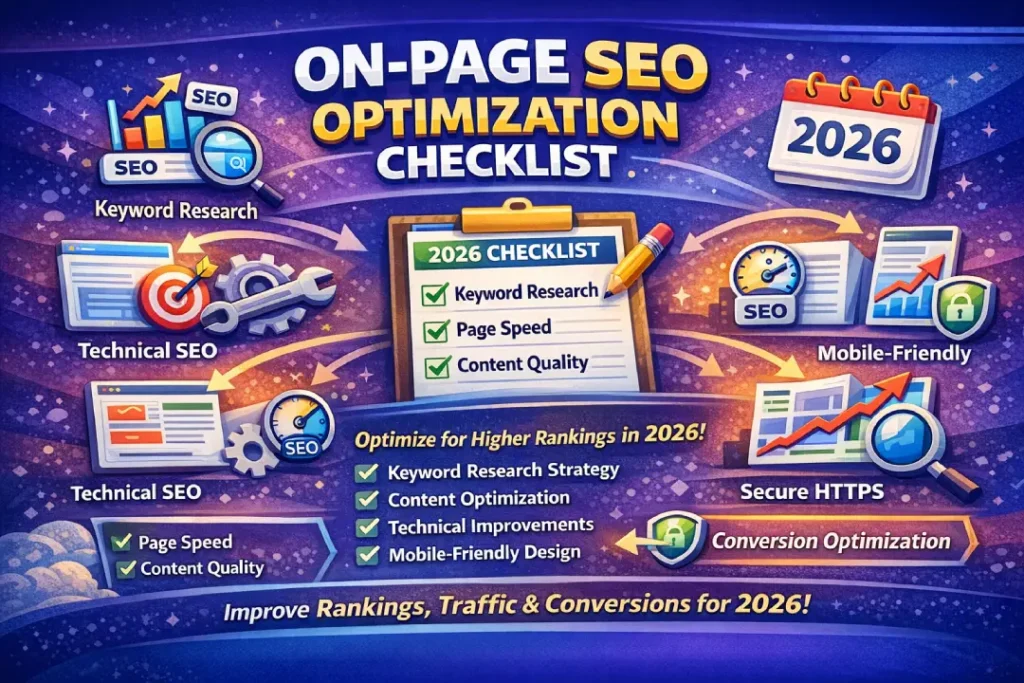
The Website Relaunch SEO Checklist (2026 Edition)
Follow this website relaunch SEO checklist before going live:
- All 301 redirects tested.
- XML sitemap updated and submitted.
- Robots.txt reviewed.
- Canonical tags implemented.
- No-index tags removed.
- Page titles and meta descriptions optimised.
- Mobile-responsiveness tested.
- Speed tests passed.
- Structured data validated.
- Analytics & GSC tracking active.
This reduces 95% of migration-related SEO problems.
Post-Launch SEO Audit – The Most Critical Step
After going live, perform a post-launch SEO audit within 24–48 hours.
Essential steps:
- Check indexing in Google Search Console.
- Test all 301 redirects.
- Fix broken internal links.
- Monitor organic traffic for drops.
- Review mobile friendliness.
- Validate Core Web Vitals.
- Re-check structured data.
This ensures your website ranking recovery after redesign is smooth and successful.
Website Relaunch SEO Performance Analysis
30–60 days after launching, analyze:
- Keyword movements.
- Organic traffic trends.
- New page indexing.
- Bounce rate changes.
- Conversion performance.
- Page speed improvements.
This helps you refine long-term SEO strategy and ensure growth.
SEO Migration Best Practices 2026
Here are the SEO migration best practices 2026 everyone should follow:
- Never change URLs unnecessarily.
- Conduct SEO audits before and after the redesign.
- Implement 301 redirects properly.
- Monitor rankings weekly.
- Keep content optimized and relevant.
- Use analytics to track user flow.
- Secure the site with HTTPS.
- Prioritize mobile SEO.
- Follow structured data guidelines.
- Keep Core Web Vitals green.
Final Thoughts – Relaunch Your Website Without Losing SEO
Redesigning a website should boost performance, not damage it. With this site migration SEO guide, you can safely relaunch your website without losing rankings, traffic, or revenue.
If you need expert help, Harsh Mittal – Technical SEO Expert (Digital Project Manager) specialises in:
- Website Redesign SEO.
- SEO Migration Strategy.
- Large-scale URL Migrations.
- Technical SEO Audits.
- Core Web Vitals Optimization.
Your website relaunch in 2026 can be smooth, risk-free, and SEO-friendly with the right execution.
FAQs – Website Redesign & SEO Migration
Why is SEO important during a website redesign?
SEO protects your rankings, traffic, and overall visibility during the redesign process.
How can I redesign a website without losing SEO?
By maintaining URL structure, using 301 redirects, preserving content, and auditing pre- and post-launch.
What is SEO migration?
SEO migration is the process of maintaining SEO during site redesign, domain changes, or structural updates.
Do I need a Technical SEO expert for migration?
Yes, especially for large websites. Experts like Harsh Mittal ensure risk-free migration.
What are 301 redirects in SEO migration?
They permanently point old URLs to new ones, ensuring SEO value is retained.
How long after redesign does SEO stabilise?
Stabilisation usually takes 30–60 days, depending on website size and crawl frequency.
Should I update content during the redesign?
Yes, but avoid deleting pages that rank well. Optimise and expand instead.
What tools help with SEO migration?
Google Search Console, Screaming Frog, GA4, PageSpeed Insights, and Ahrefs.
Can a redesign improve SEO?
Yes, if done correctly, it can boost UX, speed, indexing, and ranking.
What is the biggest SEO risk during redesign?
Losing URL integrity or missing 301 redirects leading to ranking drops.