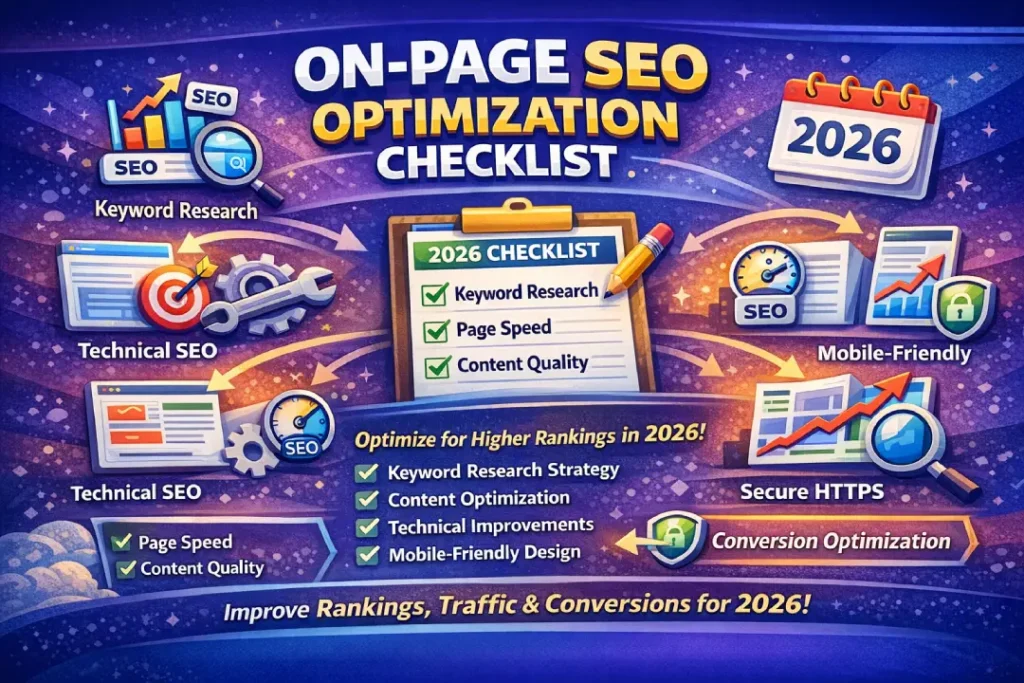
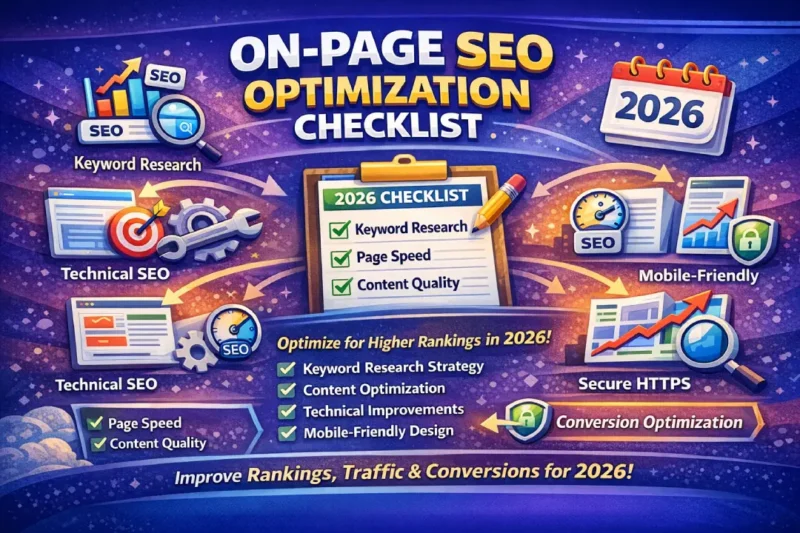
Search engines are evolving rapidly with AI-powered ranking systems, helpful content signals, and stronger user experience evaluation. In 2026, simply adding keywords is no longer enough to rank pages. Businesses must combine content quality, technical structure, semantic keyword targeting, and conversion-focused optimization. This On-Page SEO Optimization Checklist explains how to improve rankings, user engagement, and organic visibility using proven strategies followed by experts like Harsh Mittal — Technical SEO Expert (Digital Project Manager).
Why On-Page SEO Matters in 2026
Search engines now evaluate:
- Helpful content signals.
- User experience.
- Topic expertise.
- Content structure.
- Page performance.
A properly optimized page helps search engines understand:
- What your page is about.
- Who the content helps.
- Why it deserves to rank.
On-page SEO ensures your website becomes both search-friendly and conversion-ready.
Keyword Research Strategy (Focus on Intent)
Keyword placement without a strategy no longer works.
👉 Always focus on keywords related to keywords, meaning semantic variations, service-based searches, and problem-solving queries connected to your primary topic.
Example Keyword Structure
Primary Keyword:
- on-page SEO optimization checklist.
Related Keywords:
- on-page SEO services.
- SEO content optimization.
- website on-page SEO audit.
- SEO checklist 2026.
Long-tail Keywords:
- how to optimize website pages for SEO.
- on-page SEO strategy for ranking.
Intent-focused keyword research attracts users ready to engage or convert.
Title Tags and Meta Optimization
Your page title remains one of the strongest ranking signals.
Best practices:
- Include the primary keyword naturally.
- Keep titles under 60 characters.
- Add emotional or action-driven words.
Example:
On-Page SEO Optimization Checklist 2026 | Improve Rankings.
Meta descriptions should:
- Explain benefits clearly.
- Include keywords naturally.
- Encourage clicks.
Higher click-through rates improve ranking signals.
Content Structure Optimization
Search engines prefer structured content.
Use:
- H1 for the main topic.
- H2 for major sections.
- H3 for supporting points.
Clear structure improves readability and crawling.
Avoid large blocks of text.
Instead:
- Use bullet points.
- Short paragraphs.
- Logical topic flow.
Structured content helps both users and search engines.
Content Quality and EEAT Signals
EEAT (Experience, Expertise, Authority, Trust) is critical.
Include:
- Author expertise.
- Real examples.
- Practical solutions.
Technical SEO experts and Digital Project Managers ensure content aligns with business goals rather than just keywords.
Add:
- Case examples.
- Industry insights.
- Updated statistics.
Helpful content earns better engagement and rankings.
Internal Linking Strategy
Internal links distribute authority across your website.
Best practices:
- Link related service pages.
- Connect blogs to landing pages.
- Use descriptive anchor text.
Example:
Blog → SEO Audit Service → Contact Page.
Internal linking also improves crawling efficiency.
Image Optimization Checklist
Images improve engagement but can slow websites.
Optimize by:
- Compressing image sizes.
- Adding descriptive filenames.
- Using ALT text with keywords.
ALT text helps accessibility and image search rankings.
Technical On-Page SEO Elements
Technical improvements directly influence rankings.
Checklist includes:
Page Speed
- Reduce heavy scripts.
- Use caching.
- Optimize hosting.
Mobile Optimization
Most users browse using smartphones.
Ensure:
- Responsive design.
- Easy navigation.
- Fast loading.
Secure HTTPS
Security builds trust.
HTTPS websites perform better in search results.
Schema Markup
Add structured data for:
- FAQs.
- Services.
- Reviews.
Schema improves rich search appearance.
User Experience Optimization
SEO now measures user behavior.
Improve:
- Navigation clarity.
- Page readability.
- CTA visibility.
Reduce bounce rates by answering questions quickly.
Conversion Optimization (Important for SEO)
Ranking alone does not generate revenue.
Add:
- Consultation forms.
- Sticky call buttons.
- Free audit offers.
Visitors should know what action to take next.
Common On-Page SEO Mistakes to Avoid
Avoid:
- Keyword stuffing.
- Duplicate titles.
- Thin content.
- Missing internal links.
- Slow loading pages.
Fixing these alone improves rankings significantly.
Role of Technical SEO Experts
SEO requires planning beyond content writing.
Professionals like Harsh Mittal analyze:
- Keyword gaps.
- Page indexing.
- Technical performance.
- Conversion funnels.
Combining technical expertise with content strategy produces sustainable SEO growth.
Improve Page Rankings
If your website struggles to rank despite publishing content regularly, it’s time to implement a structured On-Page SEO Optimization Checklist.
Improve content quality, keyword relevance, and technical performance to achieve stronger rankings and better conversions.
Start optimizing today and unlock higher organic visibility.
10 FAQs – On-Page SEO Optimization Checklist
What is on-page SEO optimization?
On-page SEO involves optimizing website content, structure, and HTML elements to improve rankings.
Why is on-page SEO important in 2026?
Search engines evaluate content quality, user experience, and semantic relevance more than ever.
How often should on-page SEO be updated?
Content should be reviewed every 3–6 months for performance improvements.
Does keyword placement still matter?
Yes, but natural usage and semantic keyword variations are more important than repetition.
What are the most important on-page ranking factors?
Titles, content quality, internal linking, page speed, and mobile usability.
Can on-page SEO improve conversions?
Yes, better structure and CTAs guide visitors toward inquiries.
What is schema markup in SEO?
Structured data helps search engines understand page content better.
How long does on-page SEO take to show results?
Most improvements appear within weeks or months depending on competition.
Should small businesses invest in on-page SEO?
Yes, it provides long-term organic visibility and lead generation.
Who should manage on-page SEO optimization?
Experienced SEO professionals or Technical SEO Experts ensure strategic execution.