
As search evolves beyond traditional blue links, businesses face a new challenge: getting discovered inside AI-generated answers. Search engines and AI assistants are increasingly delivering direct responses rather than simply displaying lists of websites. This shift has created an entirely new discipline known as Generative Engine Optimization (GEO).
Companies that adapt early will gain a significant advantage in AI-driven search ecosystems, while those relying solely on traditional SEO may see declining visibility over time.
Generative Engine Optimization (GEO): The Future of AI Search Visibility
In this comprehensive guide, you’ll learn what GEO is, how it differs from traditional SEO and Answer Engine Optimization (AEO), and the exact roadmap businesses should follow in 2025 and 2026 to improve their AI visibility.
Primary Keywords: GEO Services 2026, Generative Engine Optimization Services, AI Visibility Optimization, Google SGE Optimization, Conversational Search Optimization, Generative AI Search Preparation
What is Generative Engine Optimization (GEO)?
Generative Engine Optimization (GEO) is the process of optimizing digital content, websites, entities, and authority signals so AI-powered search engines can discover, understand, trust, and cite your brand in generated responses.
Unlike traditional SEO, which focuses on ranking webpages, GEO focuses on increasing the likelihood that AI systems reference your content when answering user queries.
Examples include:
- ChatGPT recommendations
- Google AI Overviews (formerly SGE)
- Bing Copilot responses
- Gemini-generated search results
- Perplexity AI citations
- Claude web-based answers
- AI-powered voice assistants
The goal is no longer just ranking #1 on Google.
The goal is becoming the source AI systems trust enough to reference.
Why GEO is Critical in 2025-2026
Search behavior is changing rapidly.
Users increasingly ask complete questions such as:
- What is the best SEO strategy for a SaaS startup?
- Which digital marketing consultant specializes in AI search?
- How do I optimize my website for ChatGPT citations?
Instead of displaying ten links, AI systems now generate a direct answer.
This creates three major challenges:
Reduced Click Opportunities
AI-generated summaries often answer questions without requiring users to visit websites.
Winner-Takes-Most Visibility
AI engines usually cite only a handful of trusted sources.
Increased Importance of Authority
Search engines are relying more heavily on expertise, trustworthiness, entity recognition, and content quality.
Businesses that fail to optimize for generative search may become invisible in future search experiences.
Current State of Generative Search
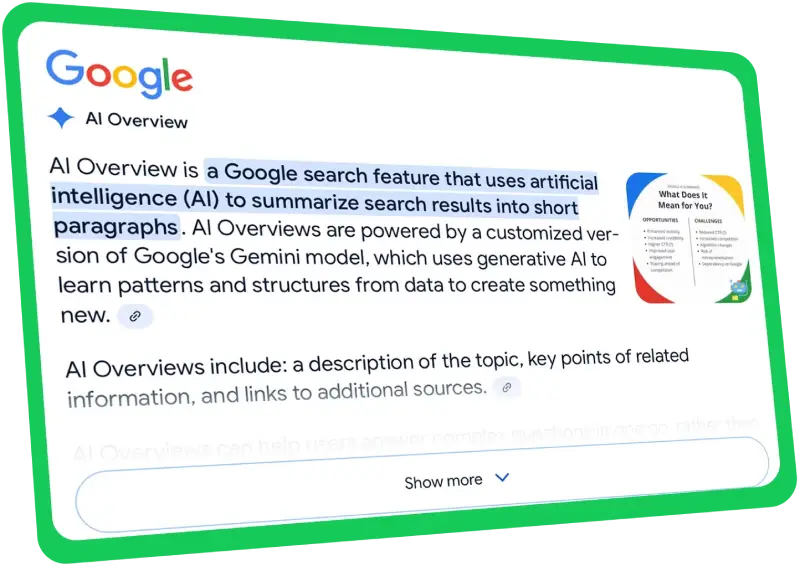
Google AI Overviews (SGE)
Google’s AI-powered search experience now appears across millions of informational queries.
AI Overviews summarize content from multiple sources and present answers directly within search results.
Businesses must optimize for:
- Semantic relevance
- Structured data
- Entity recognition
- Topical authority
- Content completeness
This has made Google SGE Optimization a critical component of modern SEO.
ChatGPT Search
ChatGPT increasingly references external web sources when providing answers.
Content that is:
- Well-structured
- Authoritative
- Frequently cited
- Entity-rich
- Easy to interpret
has a greater chance of being referenced in AI-generated responses.
This is where AI Visibility Optimization becomes essential.
Bing Copilot
Microsoft’s AI-powered search experience combines traditional search with large language models.
Bing prioritizes:
- Reliable sources
- Expert content
- Strong entity relationships
- Comprehensive topic coverage
Perplexity AI
Perplexity has become one of the fastest-growing AI search platforms because it prominently displays citations.
This creates a major opportunity for brands that invest in GEO strategies.
GEO vs Traditional SEO vs AEO
Understanding the differences helps businesses allocate resources effectively.
| Factor | Traditional SEO | AEO | GEO |
|---|---|---|---|
| Primary Goal | Rankings | Featured Answers | AI Citations |
| Focus | Keywords | Questions | Entities + Context |
| Success Metric | Traffic | Featured Snippets | AI Visibility |
| Optimization Method | On-Page SEO | FAQ Content | Semantic Authority |
| Search Experience | Search Results | Direct Answers | AI Generated Responses |
Traditional SEO
Focuses on rankings and organic traffic.
Answer Engine Optimization (AEO)
Focuses on earning featured snippets and direct answers.
Generative Engine Optimization (GEO)
Focuses on becoming an authoritative source for AI systems.
GEO doesn’t replace SEO.
It expands SEO into the AI era.
The 5 Pillars of GEO Strategy
1. Entity-Based Content Optimization
AI systems understand entities better than keywords.
An entity can be:
- A person
- Brand
- Company
- Product
- Service
- Location
- Concept
For example:
Instead of simply targeting “SEO Consultant,” AI systems connect:
- Harsh Mittal
- AI SEO Specialist
- Digital Marketing Consultant
- GEO Expert
- SEO Consultant
These entity relationships help AI understand expertise and authority.
Implementation Checklist
✔ Create comprehensive author profiles
✔ Build entity consistency across platforms
✔ Optimize About pages
✔ Use structured data
✔ Strengthen brand mentions
2. Semantic SEO & Schema Markup
Modern AI systems understand topics, relationships, and context.
Semantic SEO helps search engines understand:
- What your content means
- How concepts relate
- Why your content is relevant
Essential Schema Types
- Organization Schema
- Person Schema
- Article Schema
- FAQ Schema
- Service Schema
- Review Schema
- Breadcrumb Schema
Structured data acts as a communication layer between your website and AI systems.
3. Authority & Trust Signals
AI engines increasingly evaluate trustworthiness.
Strong authority signals include:
E-E-A-T Optimization
Experience
Expertise
Authoritativeness
Trustworthiness
Trust Building Elements
- Expert authorship
- Industry citations
- Case studies
- Reviews
- Awards
- Press mentions
- Thought leadership content
Authority is becoming one of the strongest GEO ranking factors.
4. Conversational Keyword Targeting
AI users search differently.
Traditional search:
“SEO agency”
AI search:
“Which SEO consultant can help my website appear in ChatGPT search results?”
This creates opportunities for Conversational Search Optimization.
Content Formats That Perform Well
- FAQs
- How-to guides
- Comparison articles
- Industry research
- Expert insights
- Long-form educational content
The more naturally your content answers questions, the easier it becomes for AI systems to use it.
5. Technical SEO for AI Readability
AI systems need structured and accessible content.
GEO Technical Requirements
Crawlability
- XML sitemaps
- Clean architecture
- Internal linking
Indexability
- Proper canonical tags
- No blocked resources
Readability
- Clear headings
- Logical structure
- Semantic HTML
Performance
- Core Web Vitals
- Mobile optimization
- Fast page speeds
Content Accessibility
- Schema markup
- Descriptive metadata
- Proper hierarchy
Technical SEO remains the foundation of successful GEO.
GEO vs Other Emerging SEO Approaches
GEO vs Programmatic SEO
Programmatic SEO focuses on scaling content production.
GEO focuses on making content understandable and trustworthy for AI systems.
GEO vs AI Content Generation
AI content creation is about producing content.
GEO is about optimizing content visibility in generative search.
GEO vs Semantic SEO
Semantic SEO is one component of GEO.
GEO includes:
- Semantic optimization
- Entity building
- Trust signals
- AI visibility
- Conversational search optimization
GEO vs AEO
AEO aims to answer questions.
GEO aims to become a source AI systems cite repeatedly.
GEO Implementation Timeline (2025-2026)
Phase 1: Foundation (Month 1)
Website Audit
- Technical SEO review
- Content assessment
- Entity analysis
- Schema implementation
Quick Wins
- FAQ improvements
- Author pages
- Structured data
Phase 2: Authority Building (Months 2-4)
Content Expansion
- Topic clusters
- Expert content
- Industry guides
Entity Development
- Knowledge graph optimization
- Brand mentions
- Digital PR
Phase 3: AI Visibility Optimization (Months 4-6)
GEO Enhancements
- Conversational content
- AI-focused FAQs
- Semantic enrichment
Trust Signal Development
- Reviews
- Case studies
- Industry recognition
Phase 4: Scale & Measure (Months 6-12)
Monitoring
- AI citations
- Brand mentions
- Search visibility
Continuous Optimization
- Content updates
- Entity strengthening
- Authority building
How to Measure GEO Success
Traditional SEO metrics are no longer enough.
GEO KPIs
AI Citation Frequency
How often AI platforms reference your content.
Brand Mention Growth
Increase in AI-generated mentions.
Entity Recognition
Improved understanding of your brand by AI systems.
AI Referral Traffic
Traffic generated from AI search platforms.
Topical Authority Expansion
Growth across topic clusters.
Search Visibility
Visibility across AI-powered search experiences.
GEO Readiness Checklist
Content
✔ Topic clusters
✔ Comprehensive guides
✔ Conversational content
✔ FAQ sections
Technical
✔ Schema markup
✔ Crawlability
✔ Fast loading pages
✔ Mobile optimization
Authority
✔ Expert authors
✔ Reviews
✔ Citations
✔ Case studies
Entity Optimization
✔ Brand consistency
✔ Knowledge graph signals
✔ Author entities
✔ Service entities
The Future of GEO Services
The next two years will fundamentally reshape how users discover information online.
Businesses that optimize only for rankings may struggle as AI-generated answers become the primary search experience.
Generative Engine Optimization Services help organizations prepare for this transition by improving:
- AI visibility
- Brand authority
- Entity recognition
- Search relevance
- Conversational discoverability
The companies that invest in GEO today will become the sources AI systems trust tomorrow.
Free GEO Readiness Audit
Is Your Website Ready for AI Search?
If you’re serious about appearing in ChatGPT, Google AI Overviews, Bing Copilot, Gemini, and other AI-powered search platforms, now is the time to assess your GEO readiness.
Get a Free GEO Readiness Audit
Discover:
✔ AI visibility opportunities
✔ Entity optimization gaps
✔ Schema and semantic SEO issues
✔ Technical improvements
✔ Conversational search opportunities
✔ GEO growth roadmap
Harsh Mittal
AI SEO Specialist | Digital Marketing Consultant
Helping businesses improve search visibility across Google, ChatGPT, AI Overviews, Gemini, Bing Copilot, and next-generation AI search engines.
Request Your Free GEO Readiness Audit Today and Future-Proof Your Search Presence for 2025-2026.
Conclusion
Generative search is no longer a future trend—it is the new reality of digital discovery.
As AI platforms become the primary gateway to information, brands must evolve beyond traditional SEO and embrace Generative Engine Optimization.
By focusing on entity optimization, semantic SEO, authority building, conversational search, and technical excellence, businesses can position themselves to earn visibility in the AI-powered search ecosystem.
The question is no longer whether GEO matters.
The question is whether your competitors will adopt it before you do.