
Learn how ChatGPT, Gemini, Claude, and AI search engines choose which websites to cite. Discover the key ranking signals, schema strategies, E-E-A-T principles, and content structures that improve AI visibility.
How AI Search Engines Like ChatGPT Select Your Content
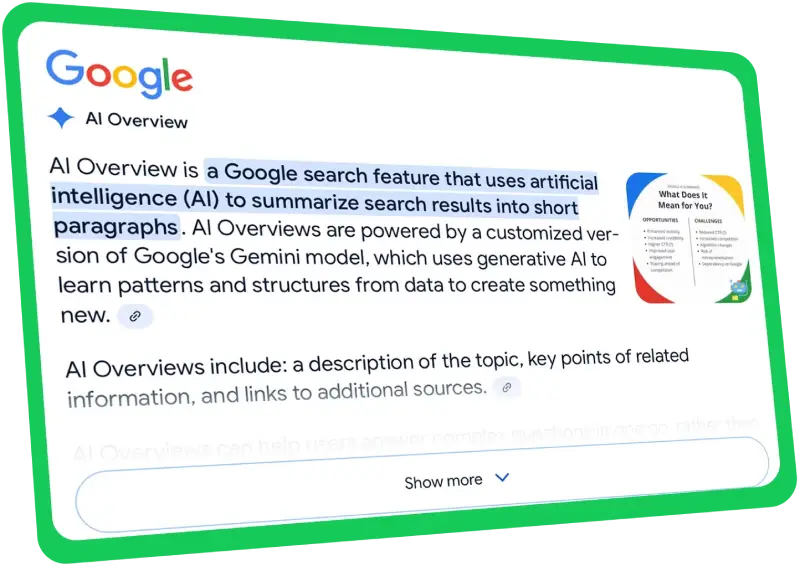
The way people search online is changing faster than ever. Instead of clicking through ten blue links, users now ask questions directly to AI-powered search engines such as ChatGPT, Google AI Overviews, Gemini, Claude, and Perplexity.
The challenge?
Most websites never appear in AI-generated answers.
Even websites that rank on the first page of Google often receive zero citations from AI systems. This has created a new optimization challenge known as ChatGPT SEO optimization.
If your business depends on organic visibility, understanding how AI systems select content is no longer optional.
In this guide, you’ll learn:
- How large language models (LLMs) work
- The 7 signals AI uses when choosing sources
- Why E-E-A-T matters more than ever
- How to structure content for AI retrieval
- The role of schema markup
- Common mistakes preventing AI citations
- A real before-and-after optimization example
Let’s start with the fundamentals.
How Large Language Models Actually Work (Simplified)
Many marketers assume ChatGPT works like Google.
It doesn’t.
Traditional search engines crawl websites, index pages, and rank results.
Large Language Models (LLMs) work differently.
They are trained on massive amounts of content and use advanced retrieval systems to generate answers based on patterns, context, and trusted sources.
When users ask a question such as:
“What is the best way to optimize a website for AI search?”
AI systems often:
- Understand the intent of the question.
- Retrieve relevant content from trusted sources.
- Compare multiple sources.
- Extract useful information.
- Generate a summarized response.
- Cite sources deemed authoritative and relevant.
The goal isn’t simply ranking.
The goal is becoming the source AI trusts enough to reference.
This is where ChatGPT SEO optimization becomes critical.
Why Most Websites Receive Zero AI Citations
Many websites are invisible to AI systems because they were built exclusively for traditional search engines.
Common issues include:
- Thin content
- Lack of expertise signals
- Poor structure
- Missing schema markup
- Generic AI-generated content
- Weak topical authority
- No unique insights
AI systems prioritize information quality over keyword stuffing.
If your content adds nothing new to the web, AI has little reason to cite it.
The 7 Signals AI Uses to Select Content
While companies don’t reveal their exact algorithms, research and observed citation patterns reveal several common selection signals.
1. Topical Authority
AI systems favor websites that consistently publish high-quality content within a specific subject area.
For example:
A website with 100 detailed SEO articles is more likely to be cited than a general marketing website with only a few SEO posts.
Topical authority signals include:
- Content clusters
- Internal linking
- Subject expertise
- Comprehensive coverage
The more complete your topical ecosystem becomes, the more trustworthy you appear.
2. Content Relevance
AI retrieval systems look for direct answers.
Content that immediately addresses a query often performs better than long introductions filled with fluff.
Instead of:
“SEO has changed a lot over the years…”
Use:
“ChatGPT SEO optimization helps websites become visible and cited in AI-generated search results.”
Direct answers improve retrieval success.
3. Demonstrated Expertise
AI systems increasingly evaluate expertise.
This aligns closely with Google’s E-E-A-T framework.
Strong expertise signals include:
- Original research
- Industry case studies
- Expert commentary
- Real-world experience
- Data-backed recommendations
Generic content written without expertise often gets ignored.
4. Structured Information
AI systems love organized content.
Pages with clear:
- H1 headings
- H2 sections
- Bullet points
- Tables
- FAQs
- Definitions
are easier to parse and cite.
Structure helps machines understand content relationships.
5. Trust Signals
Trust influences citation likelihood.
Important trust indicators include:
- Author profiles
- Contact information
- Editorial guidelines
- Business credentials
- Customer reviews
- Industry certifications
Anonymous websites struggle to establish credibility.
6. Content Freshness
AI search systems often favor recently updated information.
This is particularly important for:
- SEO
- AI
- Technology
- Finance
- Healthcare
Refreshing content regularly increases its usefulness.
Best practice:
Update key pages every 3-6 months.
7. Unique Information Gain
Perhaps the most important signal.
AI systems don’t want duplicate content.
They prioritize pages offering:
- Original data
- Unique frameworks
- First-hand experiences
- Proprietary research
- Expert analysis
If your article says exactly what 500 other articles say, AI has little incentive to cite it.
E-E-A-T for AI Systems
Experience
Have you actually done what you’re writing about?
Expertise
Do you understand the topic deeply?
Authoritativeness
Are others referencing your work?
Trustworthiness
Can users trust your information?
AI systems increasingly rely on similar evaluation principles.
To strengthen E-E-A-T:
Add Author Bios
Include:
- Credentials
- Experience
- Professional background
Showcase Real Experience
Share:
- Case studies
- Screenshots
- Results
- Examples
Build Authority
Earn:
- Backlinks
- Mentions
- Citations
- Industry recognition
Increase Trust
Display:
- Contact information
- Privacy policies
- Company details
- Editorial standards
Strong E-E-A-T improves both SEO and AI visibility.
Content Structure Optimization for AI Search
Many websites write for humans but forget machines must understand the content first.
Use this structure:
Clear Question-Based Headings
Example:
- What Is ChatGPT SEO Optimization?
- How Does AI Search Choose Sources?
- Why Are Some Websites Cited More Frequently?
Question-based formatting aligns with user intent.
Answer First
Provide the direct answer immediately.
Then expand.
Example:
ChatGPT SEO optimization is the process of improving content so AI search engines can understand, retrieve, and cite it in generated responses.
Follow with supporting information.
Use Lists and Steps
AI systems frequently extract:
- Numbered processes
- Checklists
- Bullet points
These formats improve citation potential.
Include FAQ Sections
FAQs create highly retrievable content.
Example:
Does ChatGPT Use Google Rankings?
Not directly. While ranking signals may overlap, AI systems evaluate content differently and often use additional retrieval methods.
Schema Markup for AI Visibility
Schema markup provides machine-readable context.
Think of schema as a translator between your website and AI systems.
Important schema types include:
Article Schema – Link
Helps identify:
- Author
- Date
- Topic
- Publisher
FAQ Schema – Link
Improves understanding of question-and-answer content.
Organization Schema – Link
Provides business credibility signals.
Person Schema – Link
Strengthens author authority.
Review Schema – Link
Adds trust indicators where appropriate.
How To Schema
Useful for instructional content.
Recommended Schema Stack
For most blogs:
- Article Schema
- Organization Schema
- Person Schema
- FAQ Schema
Combined, these create stronger machine understanding.
Common Mistakes That Prevent AI Citation
Even good websites often make these mistakes.
Publishing Generic AI Content
Thousands of websites now publish near-identical AI-written articles.
Without unique value, citations rarely happen.
Ignoring Author Information
Anonymous content weakens trust.
Always identify authors.
Weak Internal Linking
Disconnected content reduces topical authority.
Create content clusters.
Poor Formatting
Large walls of text make retrieval harder.
Use:
- Headings
- Lists
- Tables
- FAQs
No Original Insights
The fastest way to become invisible is repeating information already available everywhere.
Add unique viewpoints.
Outdated Content
AI systems often prefer current information.
Regular updates matter.
Missing Schema Markup
Without schema, machines receive less context.
Structured data helps content become more understandable.
Before and After Example
Let’s compare two articles.
Before Optimization
Title:
SEO Tips for Businesses
Problems:
- Generic headline
- No expertise
- No schema
- Weak structure
- No FAQs
- No author profile
Result:
Minimal AI visibility.
After Optimization
Title:
ChatGPT SEO Optimization: 15 Proven Strategies for AI Search Visibility
Improvements:
- Clear topic focus
- Strong E-E-A-T signals
- FAQ section
- Schema markup
- Original case study
- Data-backed insights
- Structured headings
Result:
Higher probability of retrieval and citation.
The difference isn’t just content quality.
It’s content usability for AI systems.
The Future of Search Is Citation-Based Visibility
Traditional SEO focuses on rankings.
AI search introduces a new objective:
Being selected as a trusted source.
The websites winning in AI search are:
- Authoritative
- Structured
- Expert-driven
- Data-backed
- Machine-readable
As AI assistants become the primary gateway to information, businesses that optimize now will gain a significant competitive advantage.
The question is no longer:
“How do I rank?”
It’s:
“How do I become the source AI trusts?”
Final Thoughts
ChatGPT SEO optimization is rapidly becoming one of the most important disciplines in digital marketing.
AI systems are transforming how users discover information, compare businesses, and make decisions.
Websites that prioritize expertise, structure, trust, and original insights are far more likely to earn citations and visibility in AI-generated responses.
Those that continue publishing generic content may find themselves invisible—even if they rank well in traditional search engines.
The future belongs to websites that optimize for both humans and AI.
Get a Free AI Content Audit
Want to know why your website isn’t appearing in ChatGPT, Gemini, Claude, or Google AI Overviews?
Our AI Content Audit identifies:
✓ Missing AI visibility signals
✓ E-E-A-T weaknesses
✓ Content structure issues
✓ Schema implementation gaps
✓ Citation opportunities
✓ AI search optimization recommendations