Running a Shopify store is easy, but generating consistent organic sales is a challenge. With increasing competition in eCommerce and the rise of AI-powered search experiences, store owners need more than basic optimization to succeed. Shopify SEO has evolved significantly, requiring a combination of technical SEO, content marketing, user experience optimization, and AI search visibility strategies.
By implementing the right Shopify SEO strategies, businesses can attract highly targeted visitors, improve search rankings, increase product visibility, and boost revenue without relying solely on paid advertising. Whether you’re a new Shopify store owner or an established eCommerce brand, understanding modern SEO techniques can help you achieve sustainable growth in 2026 and beyond.
Why Shopify SEO Matters More Than Ever
Organic traffic remains one of the most profitable channels for eCommerce businesses. Unlike paid advertising, SEO generates long-term results and delivers qualified traffic actively searching for your products.
Benefits of Shopify SEO include:
- Increased organic traffic
- Higher search engine rankings
- Improved product visibility
- Better conversion rates
- Reduced advertising costs
- Enhanced user experience
- Sustainable revenue growth
With AI-powered search becoming mainstream, optimized Shopify stores have an even greater opportunity to gain visibility across Google AI Overviews, ChatGPT, Gemini, and Bing Copilot.
What is Shopify SEO?
Shopify SEO is the process of optimizing a Shopify store to improve its visibility in search engines and AI-powered search platforms.
It involves:
- Technical SEO
- Product page optimization
- Collection page optimization
- Content marketing
- Link building
- Site speed improvements
- Schema markup implementation
The ultimate goal is to attract buyers who are actively searching for products you sell.
Essential Shopify SEO Strategies for 2026
Keyword Research for eCommerce Success
Successful Shopify SEO starts with identifying keywords that customers use when searching for products.
Focus on:
- Product keywords
- Commercial intent keywords
- Long-tail keywords
- Category keywords
- Location-based keywords
Examples include:
- Shopify SEO
- Shopify SEO expert
- Shopify store optimization
- Shopify SEO consultant India
- Shopify SEO India
Understanding search intent helps create pages that match customer expectations.
Optimize Product Pages for Search Rankings
Product pages are often the primary source of organic traffic for Shopify stores.
Create Unique Product Descriptions
Avoid manufacturer descriptions and duplicate content.
Instead:
- Highlight product benefits
- Include relevant keywords naturally
- Answer common customer questions
- Focus on conversions
Optimize Product Titles
Product titles should include:
- Primary keyword
- Product name
- Brand name (if applicable)
- Important product attributes
Improve Product Images
Image optimization helps improve rankings and user experience.
Best practices include:
- Compressed images
- Descriptive filenames
- Optimized alt text
- WebP image formats
Optimize Collection Pages
Collection pages often target high-volume keywords and generate substantial traffic.
Effective collection page optimization includes:
- SEO-friendly URLs
- Keyword-rich titles
- Optimized meta descriptions
- Unique introductory content
- Internal linking
Collection pages help search engines understand product categories and improve website structure.
Improve Shopify Site Speed
Page speed directly impacts rankings and conversions.
A slow website can increase bounce rates and reduce sales.
Ways to Improve Shopify Performance
- Compress images
- Remove unused apps
- Minimize JavaScript
- Use modern themes
- Enable browser caching
- Optimize code structure
Fast-loading stores create better user experiences and higher conversion rates.
Implement Technical Shopify SEO
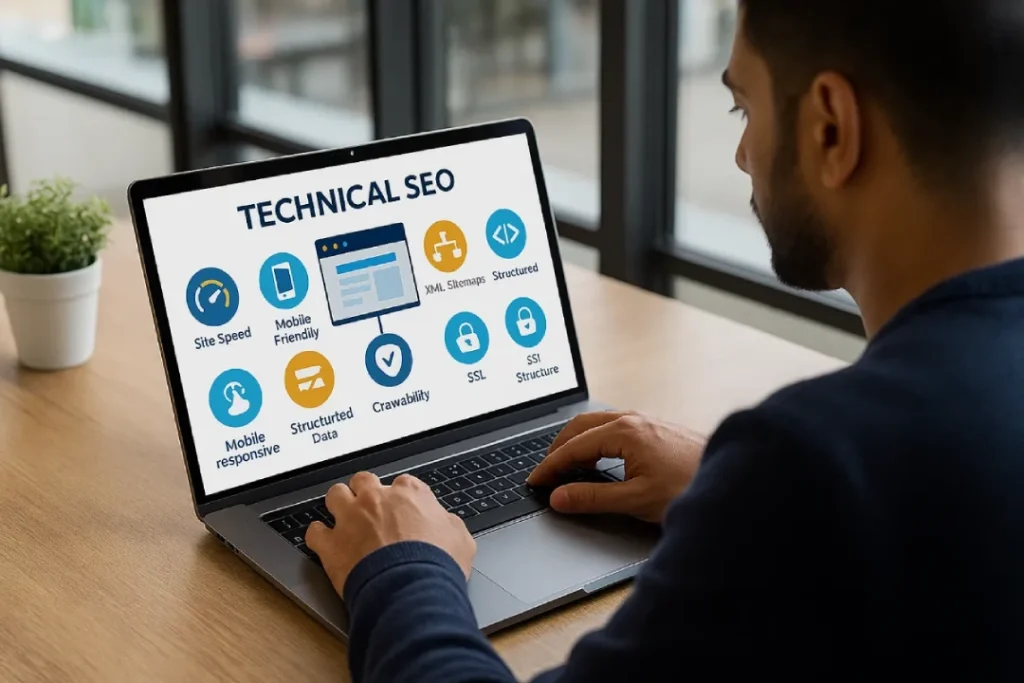
Technical SEO forms the foundation of long-term search success.
Key technical SEO tasks include:
Fix Crawl Errors
Ensure search engines can properly access and index your pages.
Optimize Site Architecture
Create a logical hierarchy:
- Homepage
- Collections
- Products
- Blog Content
Improve Mobile Experience
Most eCommerce traffic comes from mobile devices.
Your Shopify store should be:
- Mobile responsive
- Fast loading
- Easy to navigate
- Conversion-friendly
Manage Duplicate Content
Duplicate content can weaken rankings.
Proper canonical tags help search engines identify preferred URLs.
Use Content Marketing to Drive Organic Sales
Content marketing remains one of the most powerful Shopify SEO strategies.
Create:
- Buying guides
- Product comparisons
- Industry trends
- How-to articles
- Frequently asked questions
Example blog topics:
- Best Running Shoes for Beginners
- How to Choose the Right Skincare Products
- Complete Product Buying Guide
High-quality content attracts traffic throughout the buyer journey.
Optimize for AI Search and Google AI Overviews
AI-powered search is transforming eCommerce SEO.
To improve AI visibility:
Answer Customer Questions
Create FAQ sections addressing:
- Product usage
- Shipping information
- Return policies
- Product comparisons
Use Structured Data
Recommended schema types include:
- Product Schema
- Review Schema
- FAQ Schema
- Organization Schema
- Breadcrumb Schema
Structured data helps search engines and AI platforms understand your content.
Build Brand Authority
AI search engines prefer trusted sources.
Focus on:
- Customer reviews
- Expert content
- Consistent branding
- High-quality backlinks
Leverage Internal Linking
Internal links distribute authority throughout your store.
Link:
- Blog posts to products
- Products to collections
- Related products together
- Category pages to supporting content
A strong internal linking structure improves both rankings and user experience.
Why Hire a Shopify SEO Expert?
Many Shopify store owners struggle because SEO requires technical expertise, strategic planning, and ongoing optimization.
A Shopify SEO expert can help:
- Increase rankings
- Improve product visibility
- Optimize technical SEO
- Grow organic traffic
- Increase conversions
- Improve AI search visibility
Professional Shopify SEO often produces higher long-term ROI compared to relying exclusively on paid advertising.
Why Choose Harsh Mittal for Shopify SEO?
Harsh Mittal is an AI SEO Specialist and Digital Marketing Consultant helping eCommerce businesses improve rankings, traffic, and sales through advanced SEO strategies.
Services include:
- Shopify SEO Audits
- Shopify Store Optimization
- Technical Shopify SEO
- eCommerce SEO Strategy
- AI SEO Optimization
- AEO & GEO Implementation
- Content Marketing
- Conversion Optimization
By combining traditional SEO with modern AI search optimization, Shopify stores can achieve sustainable organic growth.
Conclusion
Shopify SEO is one of the most effective ways to increase eCommerce sales in 2026. As search engines and AI platforms become more sophisticated, businesses must focus on technical SEO, content quality, user experience, and AI visibility.
Implementing these Shopify SEO strategies can help improve rankings, attract qualified traffic, increase conversions, and generate long-term revenue growth.
Grow Your Shopify Sales Organically
Ready to increase your Shopify store’s rankings and sales?
Contact Harsh Mittal – AI SEO Specialist & Digital Marketing Consultant for customized Shopify SEO solutions that drive measurable business growth.